Why Is My Air Conditioner Running But Not Cooling the House?
If your air conditioner is running but not cooling the house, start with the simple checks first: thermostat settings, the air filter, blocked vents, and the outdoor unit. If you see ice, smell burning, hear electrical buzzing, or the breaker keeps tripping, turn the system off and call a qualified HVAC technician.
An AC can sound like it is working while the house still feels warm. That usually means one of three things is happening: the system is not moving enough air, it is not removing enough heat, or an electrical or refrigerant-related part is failing.
This guide walks through the most common causes in a safe order, starting with the checks most homeowners can do without opening equipment panels.
Quick Answer: Why Your AC Is Running But Not Cooling
Your air conditioner may be running but not cooling because of:
- Wrong thermostat mode or temperature setting
- Dirty or clogged air filter
- Closed or blocked supply vents
- Blocked return air grille
- Dirty indoor evaporator coil
- Frozen evaporator coil
- Dirty or blocked outdoor condenser unit
- Outdoor fan not running
- Low refrigerant or a refrigerant leak
- Weak capacitor, failed contactor, or compressor problem
- Leaky, disconnected, or poorly insulated ductwork
- Undersized AC system
- Extreme outdoor heat or high indoor humidity
The easiest things to check are the thermostat, air filter, vents, and outdoor unit. Refrigerant, electrical, capacitor, contactor, compressor, and sealed-system problems should be handled by a qualified technician.
Fast Troubleshooting Table
| Symptom | Most Likely Cause | What To Do First |
| Air blows from vents but feels warm | Thermostat setting, dirty filter, outdoor unit issue | Check Cool mode, replace filter, inspect outdoor unit |
| Weak airflow from most vents | Clogged filter, blower issue, duct problem | Replace filter and check return vents |
| Ice on copper line or indoor coil | Low airflow or low refrigerant | Turn AC off and let it thaw |
| Outdoor unit hums but fan does not spin | Capacitor, motor, or electrical issue | Turn system off and call a technician |
| Breaker keeps tripping | Electrical fault or compressor issue | Stop resetting it and call a professional |
| AC runs all day but house stays warm | Dirty coils, low refrigerant, duct leak, undersized system | Check airflow basics, then schedule service |
1. Make Sure the Thermostat Is Set Correctly
Before assuming the AC is broken, check the thermostat.
Set it to Cool and lower the temperature 3 to 5 degrees below the current room temperature. If the thermostat is set to Fan, Heat, or the wrong schedule, the blower may run without actually cooling.
Also check:
If the fan is set to On, the indoor blower can keep moving air even when the outdoor unit and compressor are not cooling. That can make it seem like the AC is running constantly.
For most homes, Auto is the better fan setting during cooling season.
2. Check or Replace the Air Filter
A dirty air filter is one of the most common reasons an AC runs but does not cool well.
When the filter is clogged, the system cannot pull enough return air across the indoor evaporator coil. That can reduce cooling, raise energy use, and sometimes cause the coil to freeze.
Turn the system off and check the filter. Replace it if it looks:
ENERGY STAR recommends checking, cleaning, or changing air filters regularly because dirty filters increase energy use and can damage equipment.
If the filter was badly clogged, give the system time after replacing it. If cooling improves, airflow was likely part of the problem.
3. Check Supply Vents and Return Vents
Your AC needs a clear airflow path. If supply vents or return vents are blocked, the system may run for a long time without cooling the house evenly.
Walk through the home and check for:
Do not close many vents to force cold air into another room. That can increase pressure in the duct system and make airflow problems worse.
If only one or two rooms are warm, the issue may be duct balancing, insulation, sun exposure, or a blocked branch duct. If the whole house is warm, look at the filter, coil, blower, outdoor unit, refrigerant, or duct system.
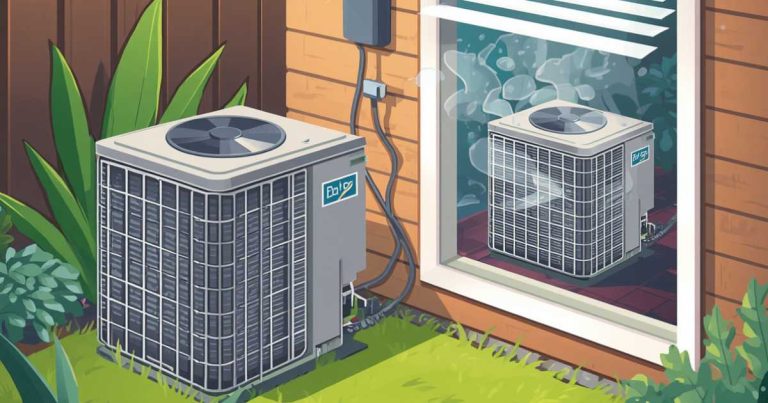
4. Inspect the Outdoor Unit
The outdoor unit releases heat from your home. If it is dirty, blocked, or not running correctly, your AC may blow air but fail to cool.
Go outside and look at the condenser unit.
Check for:
Keep plants and debris away from the outdoor unit. A blocked condenser coil cannot release heat efficiently, so the system may run longer and cool less.
Do not open the electrical panel on the outdoor unit unless you are trained and qualified.
5. Look for Ice on the AC System
Ice is a major warning sign.
Look near the indoor air handler, evaporator coil area, copper refrigerant line, and outdoor unit. If you see ice or frost, turn the AC off.
Common causes of a frozen AC include:
Do not keep running the AC while it is frozen. Ice can block heat transfer and strain the compressor.
Turn cooling off and let the system thaw. This may take several hours. If it freezes again after replacing the filter and opening vents, call an HVAC technician.
6. Check Whether the Outdoor Fan Is Running
If the indoor fan is blowing but the outdoor unit is silent, humming, or not spinning, the AC will not cool correctly.
Possible causes include:
You can check whether the breaker appears tripped. If it trips again, stop resetting it. Repeated breaker trips can point to an electrical fault.
If the outdoor unit hums but the fan does not spin, turn the system off and call a professional. Capacitors and outdoor AC electrical parts can hold dangerous voltage.
7. Consider Low Refrigerant or a Leak
Low refrigerant can make an AC run constantly without cooling well. It can also cause ice on the evaporator coil or refrigerant line.
Signs may include:
Refrigerant is not fuel. A central AC should not normally “use up†refrigerant. If refrigerant is low, there may be a leak.
Do not try to add refrigerant yourself. EPA Section 608 rules require proper certification for technicians who service equipment in ways that can release refrigerants. A qualified technician should find the leak, repair it if possible, and charge the system correctly.
8. Dirty Coils Can Make the AC Run Longer
Your AC has two important coils:
If either coil is dirty, the system has a harder time moving heat. That can make the AC run longer, cool less, and use more electricity.
Homeowners can usually replace filters and clear debris around the outdoor unit. Deeper coil cleaning may require removing panels and should be done carefully.
If the outdoor coil is packed with debris or the indoor coil is dirty enough to restrict airflow, schedule service.
9. Duct Problems Can Waste Cold Air
Sometimes the AC is cooling, but the cold air is not reaching the rooms properly.
Duct problems can include:
This is more likely if the air near the system feels cold but rooms stay warm, or if one side of the house cools much worse than the other.
If your ducts run through a hot attic, leaks and poor insulation can make cooling problems much worse.
10. The AC May Be Too Small, Old, or Struggling With Heat
During extreme heat, an AC may run longer than usual. But it should still make steady progress.
The system may struggle if:
If your AC runs all day and never gets close to the thermostat setting, there is probably a performance issue.
What You Can Safely Check Yourself
Most homeowners can safely check:
Stop troubleshooting if you see smoke, smell burning, hear electrical buzzing, see melted wiring, or feel unsure.
What Not To Do
Avoid these common mistakes:
Unsafe shortcuts can damage the system or create fire, shock, refrigerant, or water-damage risks.
When To Call an HVAC Technician
Call a qualified HVAC technician if:
Electrical, refrigerant, compressor, and sealed-system problems are not good DIY repair areas.
Simple Troubleshooting Order
Use this order:
- Set the thermostat to Cool.
- Lower the set temperature by 3 to 5 degrees.
- Replace the air filter.
- Open and unblock vents.
- Clear debris around the outdoor unit.
- Look for ice.
- Check if the outdoor fan is spinning.
- Turn the system off if you see ice, smell burning, or hear buzzing.
- Call a technician if the problem continues.
How To Prevent This Problem
To reduce future cooling problems:
- Check the air filter monthly during heavy use
- Keep supply and return vents clear
- Keep grass and debris away from the outdoor unit
- Schedule regular HVAC maintenance
- Do not ignore weak airflow
- Fix water leaks early
- Keep thermostat settings realistic
- Improve attic insulation and air sealing where possible
A well-maintained AC cools better, uses less energy, and is less likely to fail during hot weather.
Final Verdict
If your air conditioner is running but not cooling the house, the most likely causes are restricted airflow, a dirty filter, blocked vents, dirty coils, frozen coils, low refrigerant, duct leaks, or a failing electrical component.
Start with the safe checks: thermostat, filter, vents, and outdoor airflow. If you see ice, hear buzzing, smell burning, or the outdoor unit is not running, stop troubleshooting and call a qualified HVAC technician.
Frequently Asked Questions
Why is my AC running but the house is not getting cooler?
The most common reasons are a dirty air filter, blocked airflow, frozen coils, a dirty outdoor unit, low refrigerant, duct leaks, or a failing part such as a capacitor, fan motor, contactor, or compressor.
Should I turn off my AC if it is not cooling?
Turn it off if you see ice, smell burning, hear electrical buzzing, or the system keeps running without cooling. Running a frozen or failing AC can cause more damage.
Can a dirty filter make my AC stop cooling?
Yes. A clogged filter can restrict airflow, reduce cooling, increase energy use, and sometimes cause the indoor coil to freeze.
How long should it take an AC to cool a house?
It depends on the home, AC size, outdoor temperature, insulation, ductwork, and humidity. If the AC runs for hours and never gets close to the set temperature, it needs troubleshooting.
Is low refrigerant a DIY fix?
No. Low refrigerant usually means there may be a leak. Refrigerant work should be handled by a certified HVAC technician.
Why is my AC blowing air but not cold air?
The blower may be running while the cooling side is not working properly. Possible causes include thermostat settings, dirty filter, frozen coil, outdoor unit failure, low refrigerant, or an electrical part problem.
Why does my AC run all day and still not cool?
An AC that runs all day may have restricted airflow, dirty coils, leaking ducts, low refrigerant, poor insulation, high humidity, or an undersized system. If basic checks do not help, schedule service.